W: Water-based Cleaners
Water-based cleaners are safe for these fabrics.
Welcome to Carpet Cleaning Melbourne, your trusted partner for a spotless home!
Oct 28
Understanding fabric cleaning codes is essential for proper upholstery care. These codes guide you on the safest cleaning methods for different materials, helping to prevent damage and ensure a successful cleaning process.
Water-based cleaners are safe for these fabrics.
Only solvent-based cleaners should be used; avoid water.
Can use both water and solvent-based cleaning products.
Only vacuuming is recommended; professional cleaning is advised.
When it comes to upholstery cleaning in Melbourne, understanding the various fabric types is essential for achieving the best results without causing damage. Melbourne homes frequently feature an array of upholstery fabrics, each with unique properties and care requirements. Familiarising yourself with these fabrics will help you select the appropriate cleaning methods and avoid common mishaps such as shrinkage or watermarking.
Among the most common upholstery fabrics found in Melbourne homes are cotton, polyester, leather, and synthetic blends. Each of these materials has its own cleaning requirements. For instance, cotton is generally machine washable, while leather needs special conditioners to maintain its shine and flexibility. Understanding these distinctions is vital for keeping your furniture looking its best.
Melbourne's diverse climate and lifestyle result in a variety of upholstery fabrics. Some popular choices include:
Recognising these fabric types will empower you to choose the right cleaning methods and products, ensuring your upholstery is cleaned effectively while preserving its appearance.
Another essential aspect of safe upholstery cleaning is understanding fabric cleaning codes. These codes guide you on the best cleaning methods for various materials:
Before you start cleaning your upholstery, always check the label for these codes to avoid damage and ensure a successful cleaning process.
When tackling stains, always start with the least aggressive cleaning method. For example, blotting a stain with a clean, dry cloth can often lift the stain without the need for harsh chemicals. Remember to work from the outside of the stain towards the centre to prevent spreading.
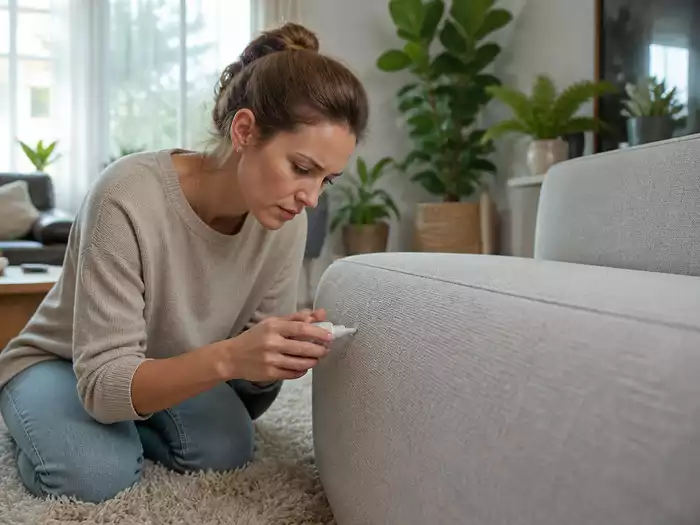
Cleaning upholstery can be daunting, especially with the varied fabrics found in Melbourne homes. To ensure safe and effective cleaning, it's essential to test your methods before committing to a particular approach. Conducting a hidden area test is a reliable way to check how a fabric reacts to cleaning solutions, helping you avoid damaging your upholstery.
To perform a hidden area test, choose a small, inconspicuous spot, such as the underside of a cushion. Apply your cleaning solution with a soft cloth and gently blot. Wait for a few minutes to observe any changes such as discolouration or fabric damage. This simple precaution can save you from costly mistakes.
Melbourne's variable weather can significantly affect drying times for upholstery. If you've used water-based cleaning methods, aim to dry your furniture quickly to prevent mould and mildew growth. It’s best to use fans or dehumidifiers, especially during the humid months, to speed up the process.
Good ventilation is crucial after cleaning your upholstery. Open windows and doors to increase air circulation, and consider using a fan to help disperse any remaining moisture. This not only speeds up drying but also helps eliminate any lingering cleaning product odours.
Stains can be a common frustration for upholstery owners. Luckily, knowing how to properly treat them can make a significant difference. Whether it’s wine, coffee, or pet urine, each stain has its best approach for removal.